
If you’re getting ready to paint a room or the outside of your house, one of the first things you’ll probably wonder is how many square feet does a gallon of paint cover?
A gallon of paint will often cover about 350 to 400 square feet for one coat. That’s a useful number to keep in mind when you’re planning, but it isn’t a rule that works for every wall.
The condition of the surface makes a difference. So does the type of paint you’re using. A smooth wall that’s already painted may take less paint than an old textured wall, and a surface that soaks up paint can change the calculation too.That’s why it’s better to measure the area you’re actually going to paint before buying anything.
How Much Can a Gallon of Paint Cover?
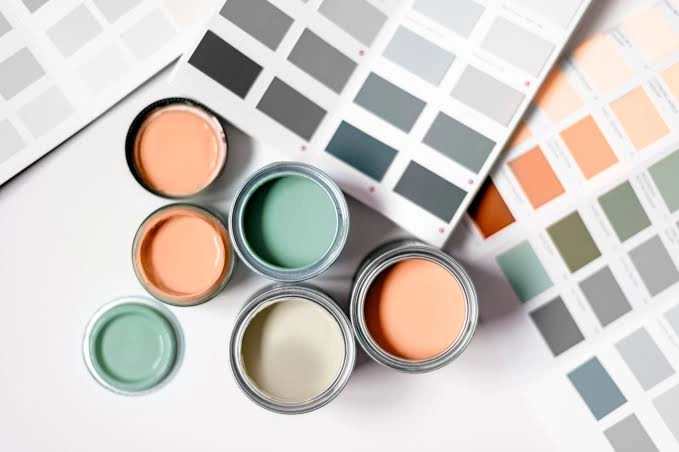
The answer depends on what you’re putting the paint on.
Let’s say you have two walls that are exactly the same size. One is smooth and has already been painted. The other is rough and has several repaired areas. You shouldn’t expect the same amount of paint to cover both surfaces.
Things such as texture, porosity, paint type, application method, and the number of coats can all affect coverage.
The coverage number printed on the paint can is therefore more useful than a general estimate you find online. If your particular product says it covers a certain number of square feet per gallon, use that figure when doing your calculation.
How Much Paint Do I Need?
The easiest way to answer how much paint do I need is to first figure out how much surface you’re painting.
Here’s a simple example.
Imagine a bedroom that’s 12 feet by 12 feet with an 8-foot ceiling.
The four walls add up to:
12 + 12 + 12 + 12 = 48 feet
Now multiply 48 by the 8-foot wall height:
48 × 8 = 384 square feet
So, you have 384 square feet of gross wall area.
Of course, you’re probably not painting every inch of it. A door and a couple of windows take up part of that space. If you know their measurements, subtract them to get a closer idea of the area that actually needs paint.
This is a much better starting point than using the home’s total floor area.
Don’t Forget the Ceiling
If the ceiling is being painted too, calculate it separately.
For the same 12 × 12 room:
12 × 12 = 144 square feet
So the ceiling adds another 144 square feet.
Keeping the walls and ceiling separate can be helpful if you’re using different colors or different types of paint.
Paint Calculator Square Feet:
You don’t need complicated math to estimate your paint.
A simple paint calculator square feet formula is:
Paintable area ÷ coverage per gallon = paint needed for one coat
Let’s say you have 1,000 square feet to paint and the product you’re using covers 350 square feet per gallon.
1,000 ÷ 350 = 2.86 gallons
So you’ll need about 3 gallons for one coat.
If you’re applying two coats:
2.86 × 2 = 5.72 gallons
That puts you at roughly 6 gallons for two coats.
It’s a starting estimate, not an exact promise. If the surface is rough or absorbs a lot of paint, your actual usage may be higher.
How to Use Paint Calculator
If you’re wondering How to Use Paint Calculator, the process is actually pretty straightforward.
First, measure the walls. For a rectangular room, add the four wall lengths together to get the perimeter.
Next, measure the height from the floor to the ceiling.
Multiply the perimeter by the height. That gives you the gross wall area.
If there are doors or windows, subtract their area if you have accurate measurements.
Then look at the paint can and check how much area the product is expected to cover. Divide your paintable area by that number.
Finally, multiply the result by the number of coats.
One thing an online calculator can’t do for you is look at the condition of your walls. That’s worth remembering. A calculator sees numbers. It doesn’t see peeling paint, rough patches, old repairs, or a heavily textured surface.
Why Your Paint May Not Cover as Much as Expected
Sometimes you do the math, buy the paint, and still find yourself reaching for another gallon.
That doesn’t necessarily mean your calculation was wrong.A rough or textured surface can take more paint than a smooth one. Porous materials can absorb paint instead of leaving as much on the surface. Fresh drywall or bare wood may also need primer before the finish paint.Color changes can make a difference too.
If you’re painting a light color over a similar light color, coverage may be fairly straightforward. If you’re trying to cover a strong dark color with a much lighter shade, you may need additional coats to get an even result.
Preparation matters as well. If you’re dealing with peeling paint, holes, cracks, or damaged areas, those problems usually need attention before the new paint goes on.
Do You Need One Coat or Two?
It depends on the project.
Sometimes one coat is enough for a simple repaint when the old surface is in good shape and the new color covers well.
Other times, two coats are the better choice.
For example, a major color change or a surface that doesn’t cover evenly may need another coat. The paint manufacturer’s instructions should be your main guide.
When you’re estimating how much paint to buy, it’s safer to calculate based on the number of coats you actually expect to apply instead of assuming one coat will always be enough.
Does Exterior Paint Cover the Same Area?
Not necessarily.Exterior surfaces can be quite different from the smooth walls you find inside a home.One house may have smooth siding, another may have stucco, while another may have brick, concrete, or a combination of materials. These surfaces don’t all use paint in the same way.
Exterior painting can also involve more preparation. Before painting, you may need to clean the surface, remove loose paint, repair damaged areas, apply caulk, or use primer.
And then there’s access. A large exterior wall or a second-story area can take considerably more work than an easy-to-reach interior wall.
For an exterior project, check the coverage information for the specific product and consider the material and condition of the surface.
How Much Is a Gallon of Paint?
If you’re also asking how much is a gallon of paint, there’s no single price for every paint product in Canada.
The cost can vary depending on the brand, quality, finish, formulation, and whether the paint is made for interior or exterior use. Different retailers may also have different prices.
But there’s something else worth keeping in mind.
The price of a gallon isn’t the same thing as the cost of getting a room or house painted.
If you hire a professional, the total estimate may include preparation, repairs, labor, materials, masking, and cleanup. Two painters can therefore give you different project prices even if they’re using a similar amount of paint.
When comparing estimates, look at the work included rather than comparing the price of paint alone.
When Should You Consider Hiring a Professional?
For a small room with walls that are already in decent condition, doing the work yourself may be manageable.Larger projects can be a different story.You may want professional help if you’re painting several rooms, working on a large exterior, dealing with high ceilings, repairing damaged surfaces, or changing from a very dark color to a light one.
The same can be true for rental properties and commercial spaces where there may be more area to cover and a tighter schedule to work around.If you get a painting estimate, ask what you’re paying for. Preparation, repairs, primer, number of coats, materials, and cleanup can all affect the final price.
Professional Painting Service CA
If you would rather have the work handled by a professional, Amazing Painter CA provides painting services for homeowners and property owners.
If you’re looking for a Professional Painting Service CA, you can discuss the size and condition of your project before deciding how much paint or preparation it may require.
This can be especially useful when you’re dealing with a large property, exterior surfaces, difficult-to-reach areas, or walls that need some work before they can be painted.
for more read the topic ‘How Many Square Feet Does a Gallon of Paint Cover?’ visit our webbsite.
Conclusion
So, how many square feet does a gallon of paint cover?
For a general starting point, one gallon may cover around 350 to 400 square feet for one coat. But your actual coverage can be different.
The best approach is to measure the area you’re painting, take doors and windows into account, check the coverage listed on your paint, and decide how many coats the surface really needs.
That little bit of planning can help you avoid buying far more paint than necessary—or discovering halfway through the job that you don’t have enough.
And if the project is large or the surface needs a lot of preparation, getting a professional estimate can make the whole process easier to plan.
FAQs
How many square feet does one gallon of paint cover?
One gallon of paint may cover around 350 to 400 square feet for one coat under suitable conditions. The actual coverage depends on the paint and the surface.
How much paint do I need for 1,000 square feet?
At 350 square feet of coverage per gallon, 1,000 square feet would require about 2.86 gallons for one coat. If you apply two coats, the basic estimate is about 5.72 gallons.
Does two coats of paint use twice as much paint?
For planning purposes, you can roughly double the one-coat amount for two coats. Actual usage may be different depending on the paint, surface, and application.
Can I use a paint calculator to work out how much paint I need?
Yes. Measure the area you’re painting, check the coverage listed on your paint, and account for the number of coats. Remember that surface condition can affect the final amount.
Does exterior paint cover the same area as interior paint?
Not always. Exterior surfaces such as stucco, siding, brick, and concrete can have different textures and absorption characteristics. The product and surface should both be considered when estimating paint.